EVT-2 Baseline Completed
In January, Mavio completed the baseline validation of the EVT-2 prototype.
The goal at this stage was not to showcase complex features. Instead, we focused on confirming whether Mavio had the core foundation for real training tests: connecting through the app, confirming device status, running basic controls, and delivering stable ball feeds.
This Month’s Focus
EVT-2 was our baseline engineering validation stage.
We focused on three core questions:
Can the app connect clearly?
Can the machine feed reliably?
What real issues appear during repeated use?
Key Progress
EVT-2 prototype baseline validation completed Core feeding ability, continuous operation, and basic machine stability were validated in the first test phase.
Basic app connection flow completed The app can search for nearby Mavio devices, connect to the machine, and show basic connection status.
Basic feeding control validated Start, pause, and stop controls were implemented in the first interaction flow, allowing the machine response to be checked before training. This also marked a small but exciting milestone: we began practicing with our own ball machine!
Top ball speed confirmed to be higher than all competitor machines we could find The prototype confirmed its ability to support high-speed feeding tests.
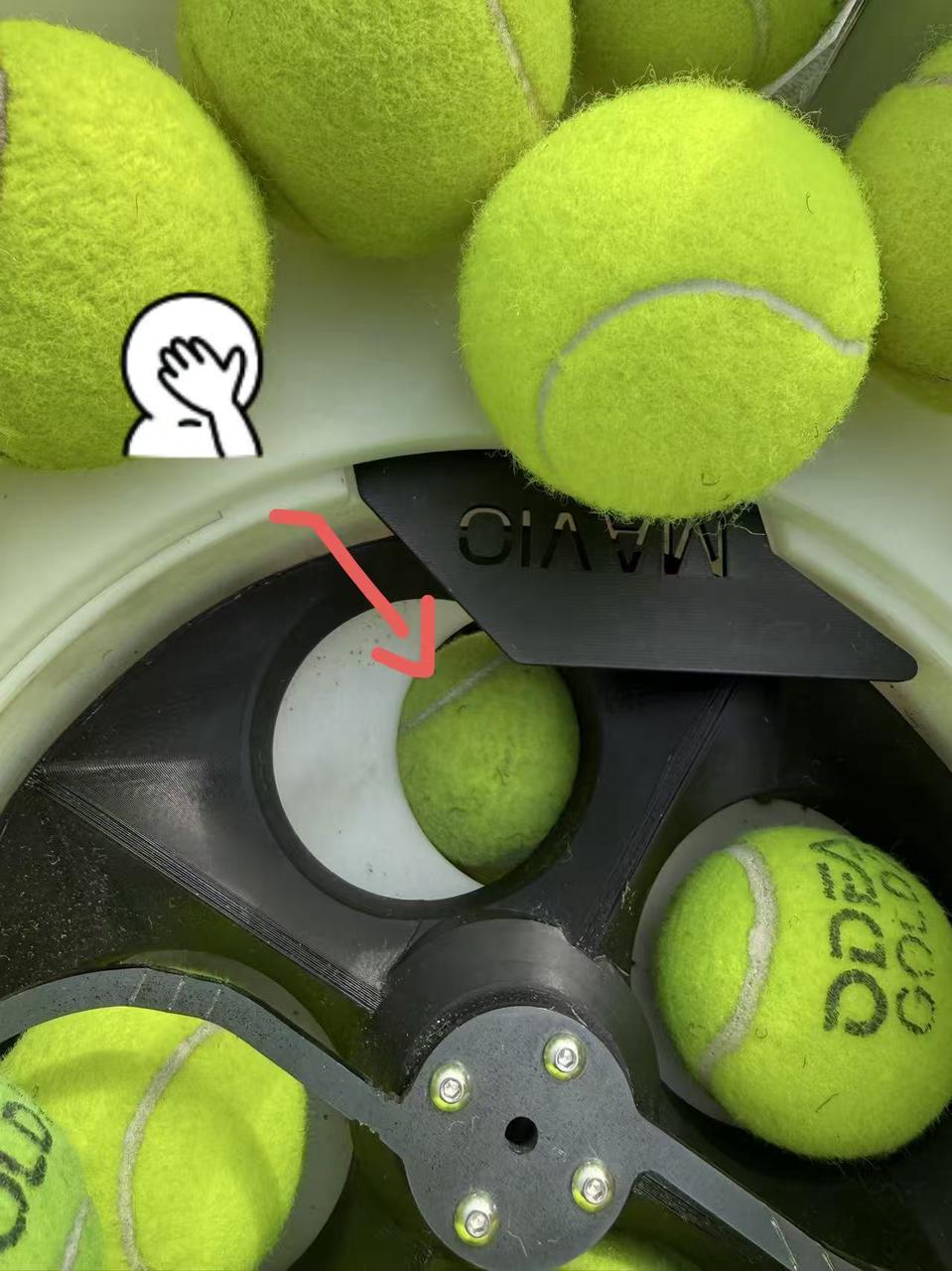
Key issues were identified Testing revealed ball-feeding jams, unstable entry at extreme angles, and high-speed serving wheel stability risks. These findings were carried into the next prototype iteration.
What We Learned
EVT-2 confirmed that Mavio is not just about “being able to feed a ball.” It needs to stay stable during repeated training.
Top speed is only one part of the product. Direction stability, rhythm, feeding path, and long-run reliability matter just as much.
What’s Next
The next stage will focus on feeding stability, jam reduction, ball-path consistency, and high-speed mechanical reliability, moving Mavio from “baseline functional” toward “ready for continuous training tests.